
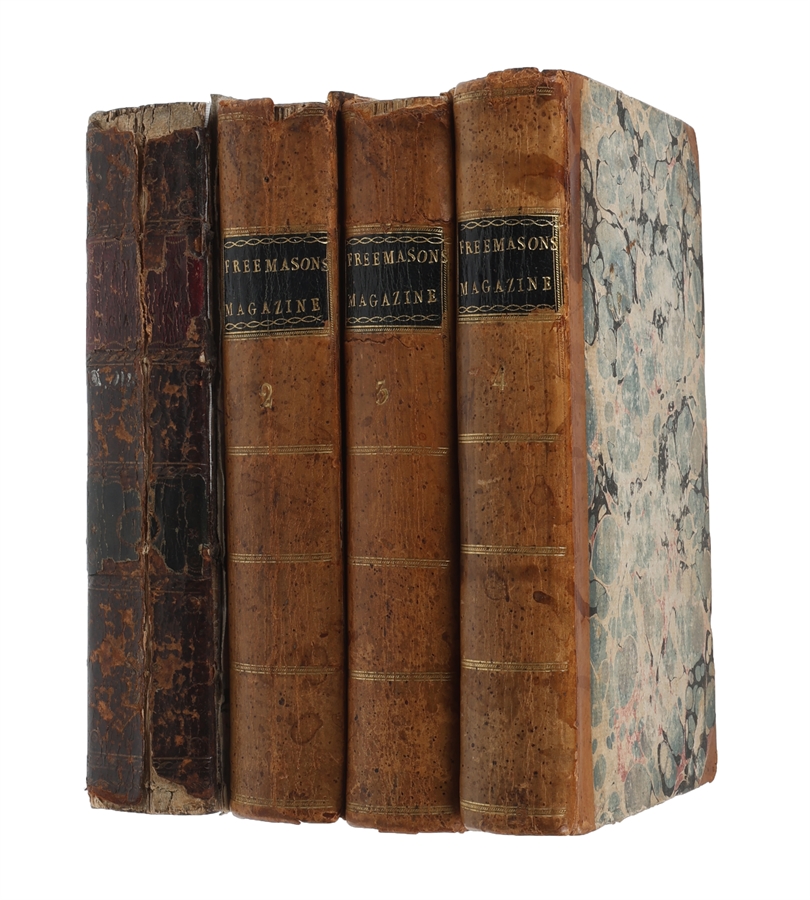
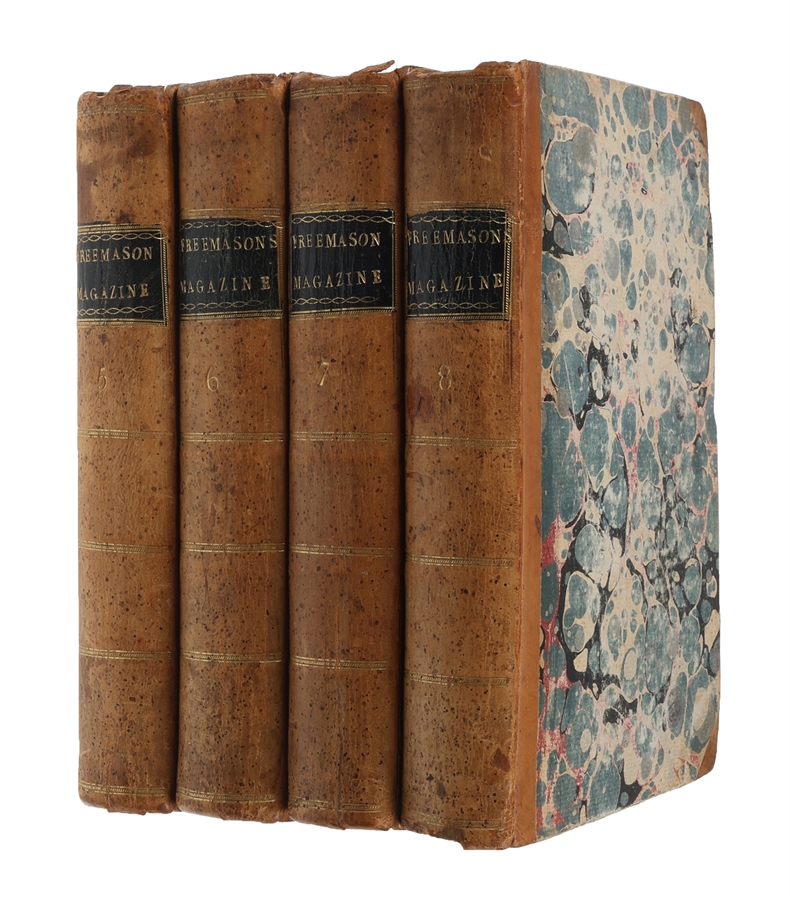
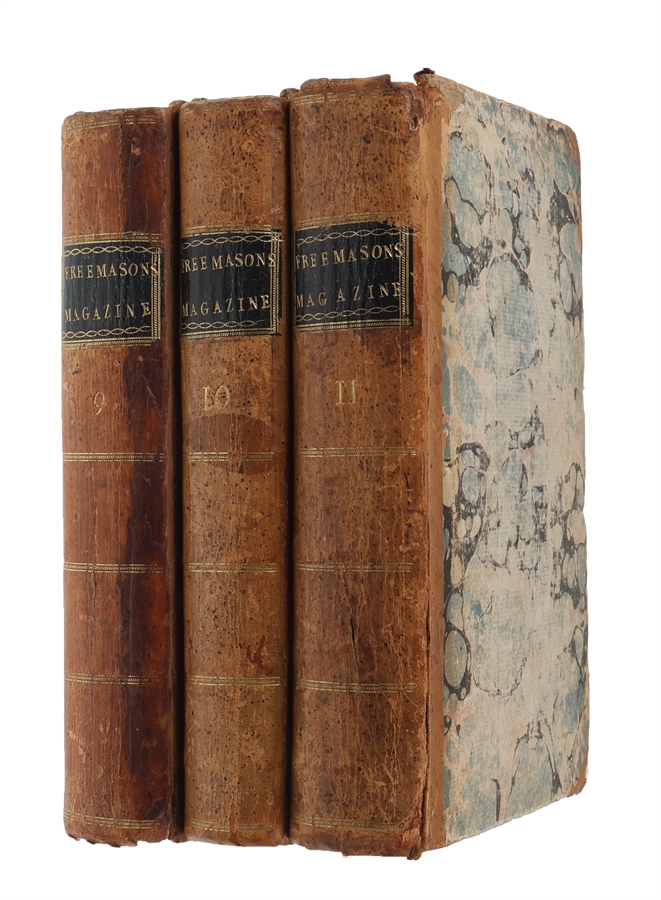
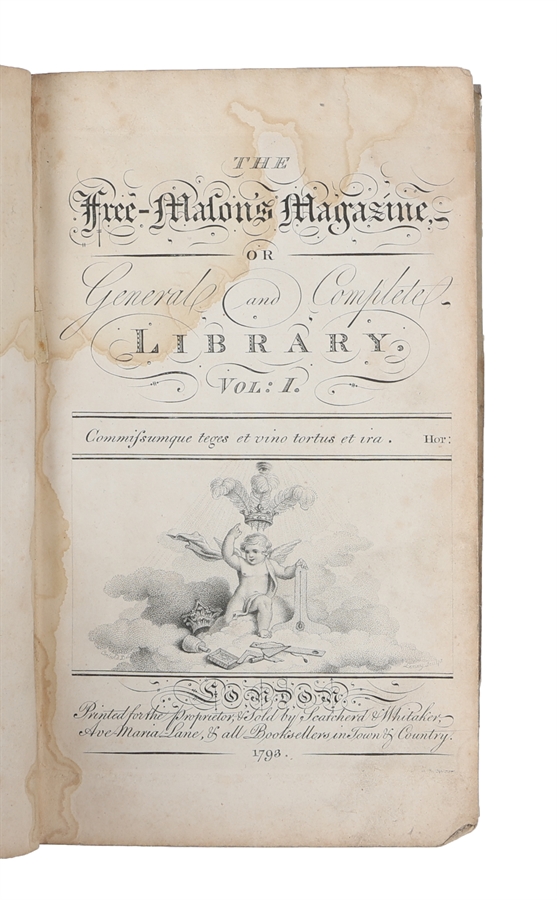
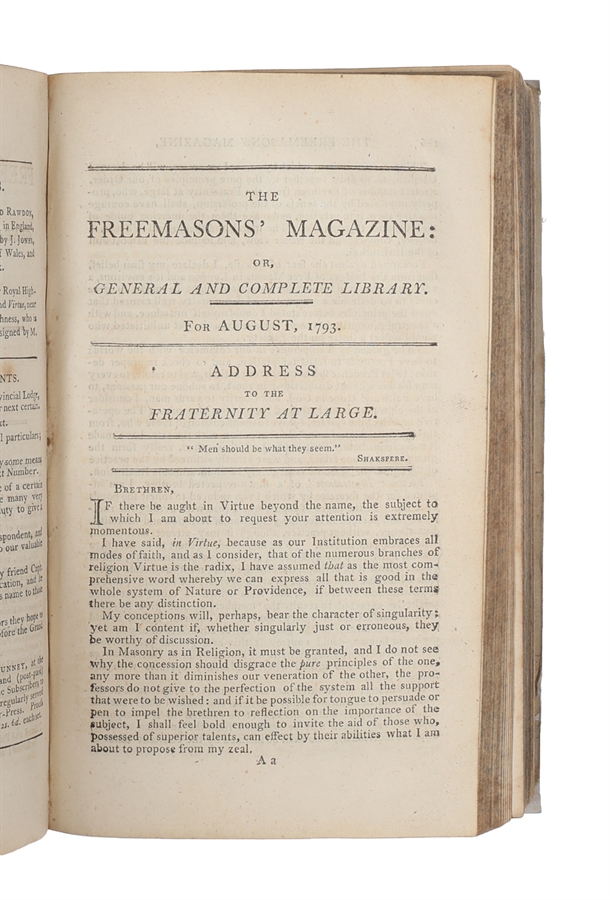
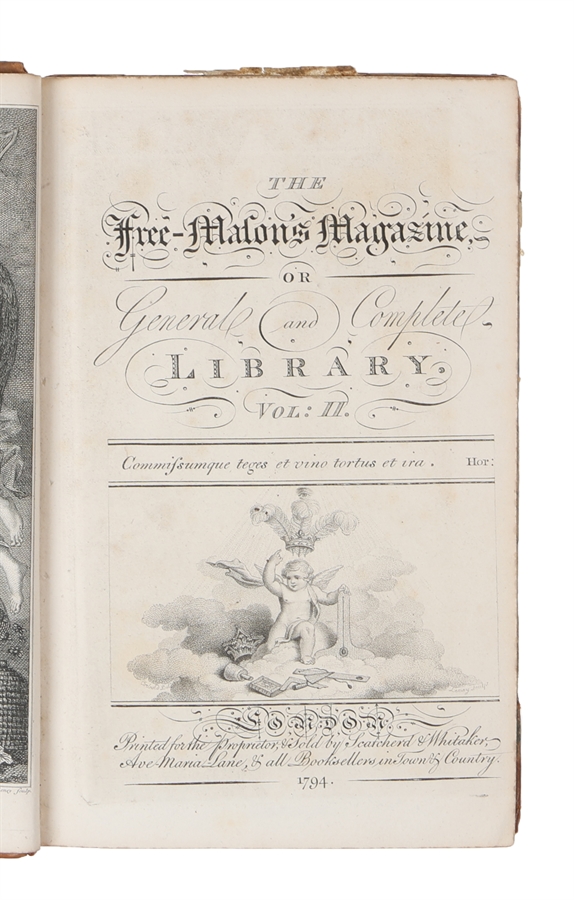
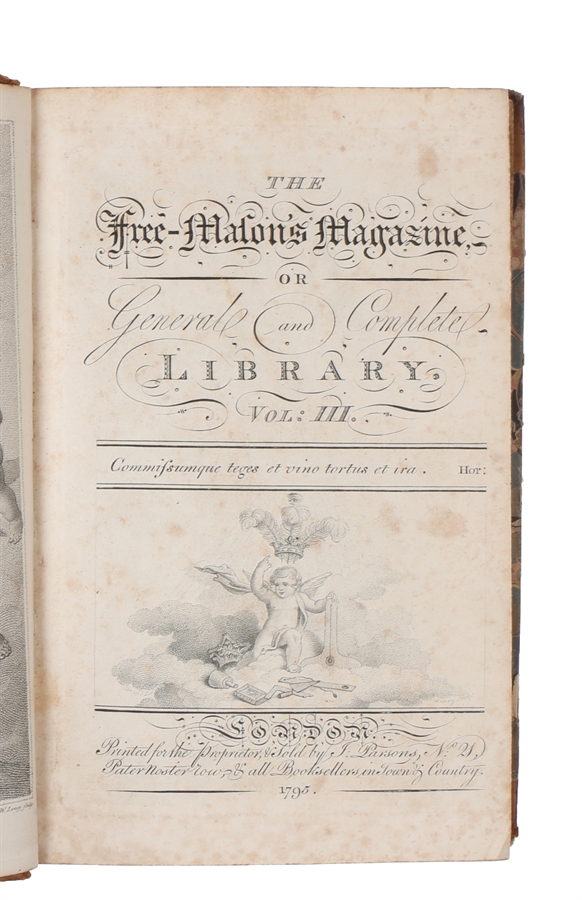
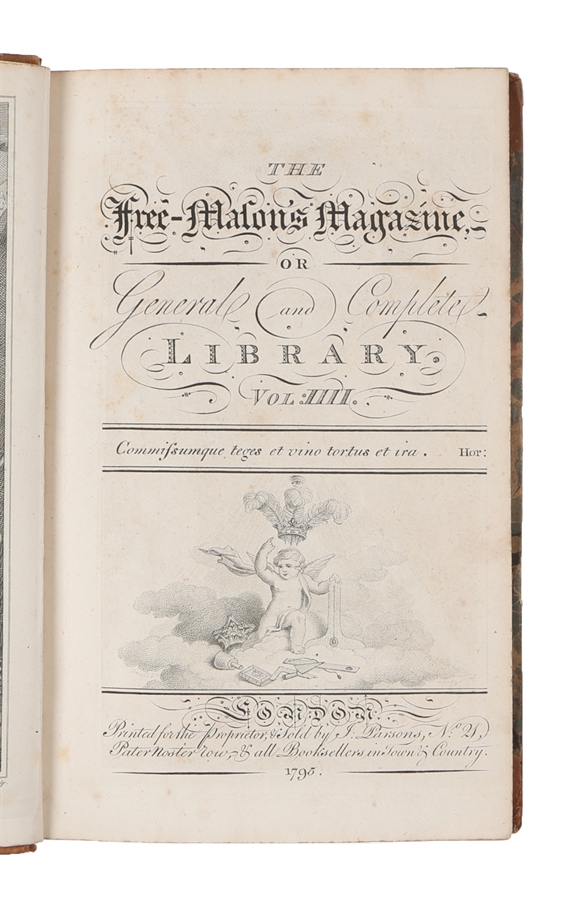
London, Scatcherd & Whitaker; Parsons; Cawthorn, 1793 - 1798.
8vo. Bound in 11 volumes. Volume 2 - 11 uniformly bound in contemporary half calfs. Volume 1 in half calf with later marbled paper covered boards. Bindings with wear and stains. Leather on spines cracked. Volume 1 with reinforced hinges a dampstain to first leaves. A few volumes with dampstain to first leaves but, internally, generally a nice and clean set.
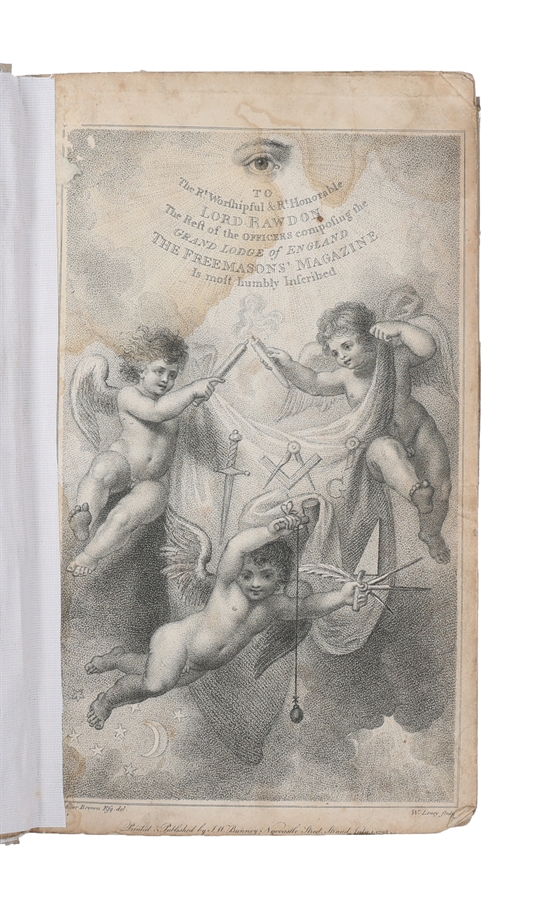
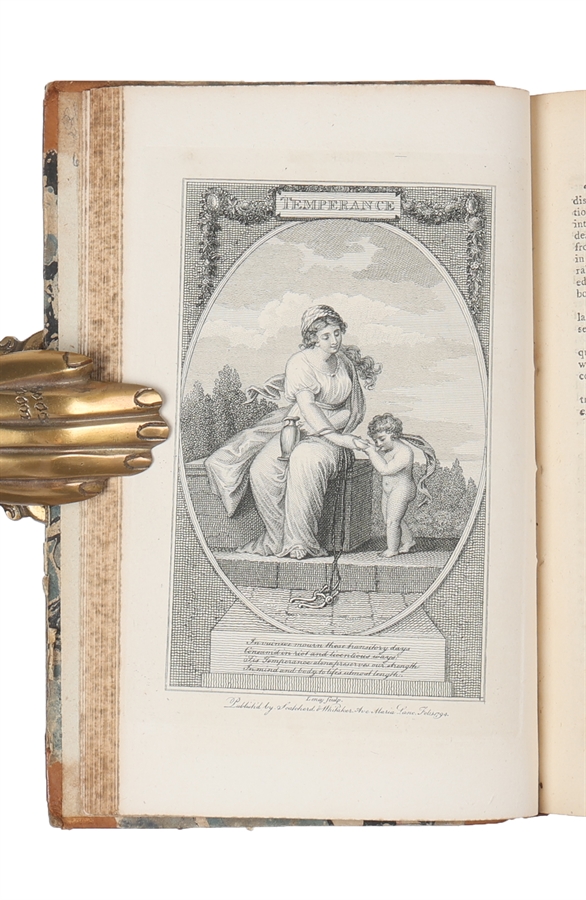
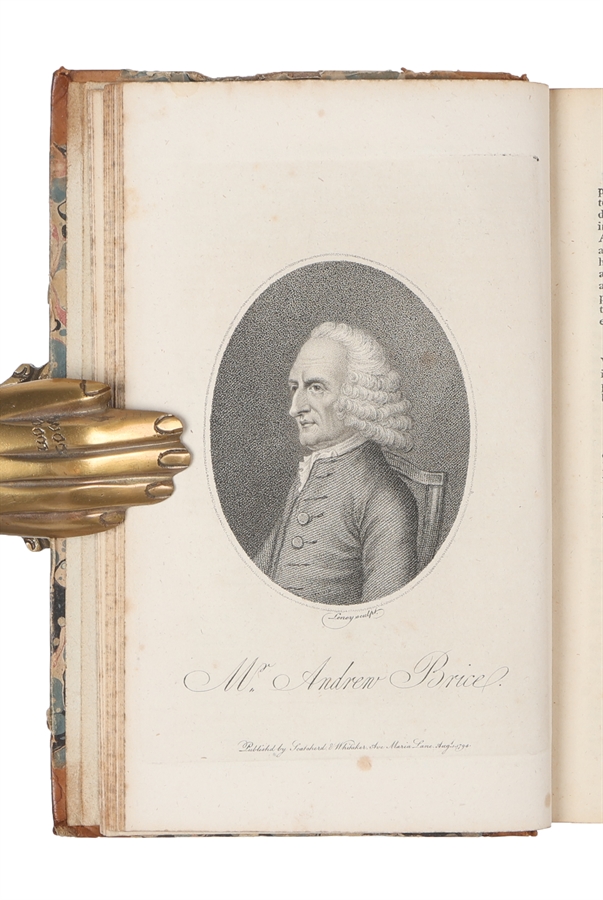
616, (4) pp. + 2 frontispiece and 7 engraved plates; (4), 480 pp. + 7 plates (Wolstieg only calling for 5); (4), 450, (4) pp. + 7 engraved plates; (4), 426, (6), 8 pp. + 7 engraved plates (Wolstieg only calling for 3); (2), 436 pp. + 6 engraved plates (Wolstieg only calling for 2); (2), 452, (4) pp. + 6 engraved plates (Wolstieg only calling for 4); (6), 438, (4) pp. + 8 engraved plates (Wolstieg only calling for 6); (4), 464, (4) pp. + 8 engraved plates (Wolstieg only calling for 4); (6), 506 pp. + 9 engraved plates (Wolstieg only calling for 4); (2), 430 pp. + 6 engraved plates (Wolstieg only calling for 1); (2), IV, 338, (8) pp. + 9 engraved plates (Wolstieg only calling for 2).
This set has a total of 79 engraved plates, Wolfstieg only calls for 47 plates.
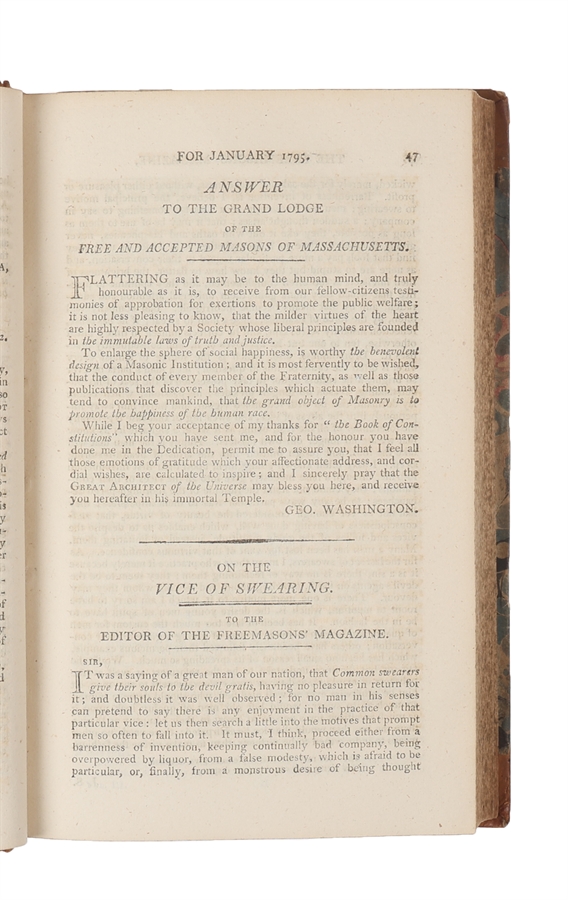
Rare complete run of the first English periodical dedicated to freemasonry, “the archetype of later Masonic periodicals” (Önnerfors, The Freemasons’ Magazine 1793–1798) published at a crucial time in the history of European Freemasonry in the immediate aftermath of the French Revolution. It represents one of the first efforts by the fraternity to define, consolidate and disseminate its intellectual and moral identity in public. Its contents - lodge proceedings, philosophical essays, antiquarian inquiries, biographical notices, poetry and finely executed symbolic engravings - reflect the full breadth of late Enlightenment Masonry. ”The Freemasons’ Magazine represent a forceful statement of British Freemasonry concerning its vigour, loyalty, and societal engagement. During 1794 the journal for the first time served as a platform to refute anti-Masonic writings that circulated in the public. Important apologies such as Defence of masonry (1730) or Cousto’s spiced account of his treatment by the Portuguese inquisition were republished. Parts of Ramsay’s ‘Oration’ were republished not just once but twice. We can also witness how the Knights Templar (called the ‘sublime degree of masonry’) entered the world of British Masonic imagination, long after the continental development. Nevertheless at the very same time Freemasonry in Britain was also celebrating technological progress in industry, agriculture, and science, which makes its relationship to modernity complex. The Freemasons’ Magazine managed to attract correspondents in different parts of the empire and even the USA. A particularly strong link throughout the first seven volumes was Edinburgh. In the last four volumes we find more material inserted from Ireland, at exactly the time when political tensions there erupted into a full-scale rebellion. The political tense years of 1797 and 1798 offer an intriguing insight into the British psyche at the time. Under constant (real and imagined) threat of French invasion, internally shaken by the Irish rebellion, uprisings, and repeated mutinies, public opinion was fuelled with anti-Masonic ideas, not at least by Robison’s book Proofs of a conspiracy. The Freemasons’ Magazine unfortunately did not survive 1798. Most importantly perhaps it can be regarded as the archetype of later Masonic periodicals, developing into a archtype Masonic press by the middle of the nineteenth century with titles such as he Freemasons’ Quarterly Magazine and Review (1834–53), The Masonic observer (1856–9), he Freemason’s Magazine and Masonic mirror (1856–71), the Freemason (1869–1951), some of them surviving well into the twentieth century. Whereas Masonic periodicals during the first century of their existence tied into the ongoing debates and controversies surrounding Freemasonry in culture and society, they developed more and more into purely internal membership magazines with little connection to the outside world.” (Önnerfors, The Freemasons’ Magazine 1793–1798). Wolfsteig 516
The importance of the work lies in its function as a precursor since it anticipates the Masonic journals in the 19th century and marks the transition of Freemasonry into a self-conscious, print-based intellectual culture.
Order-nr.: 63098