
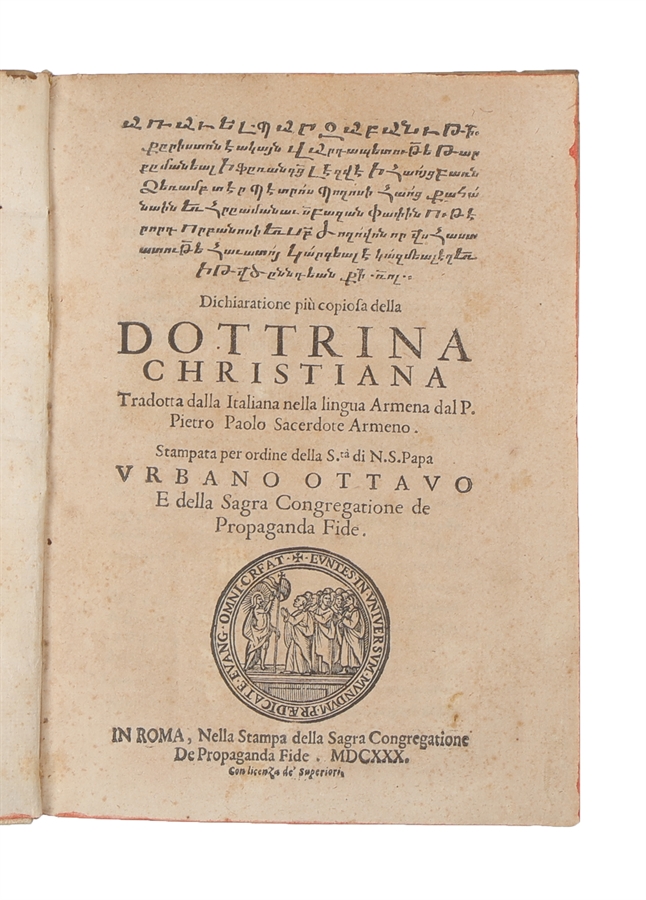
Roma, Nella stampa della Sagra Congregatione de Propaganda Fide, 1630.
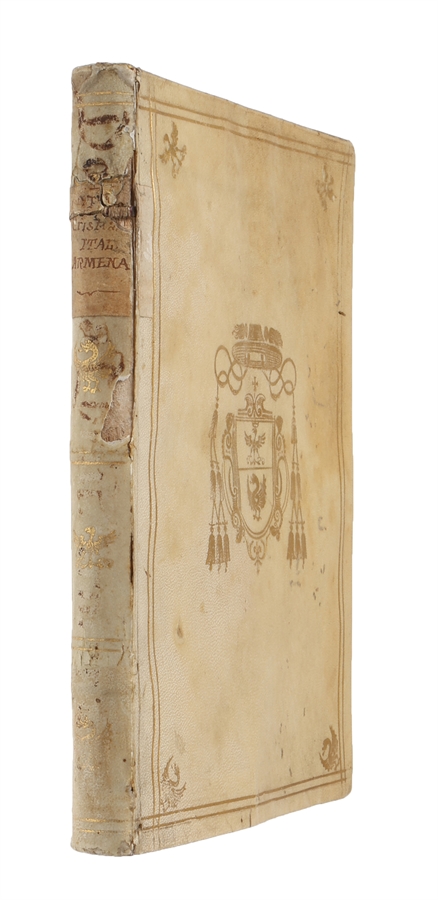
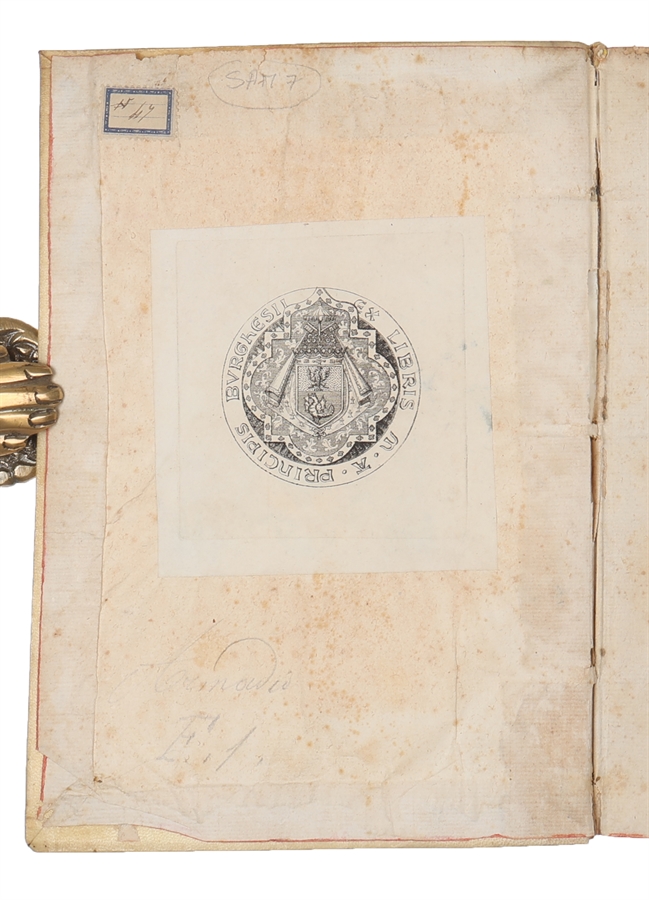
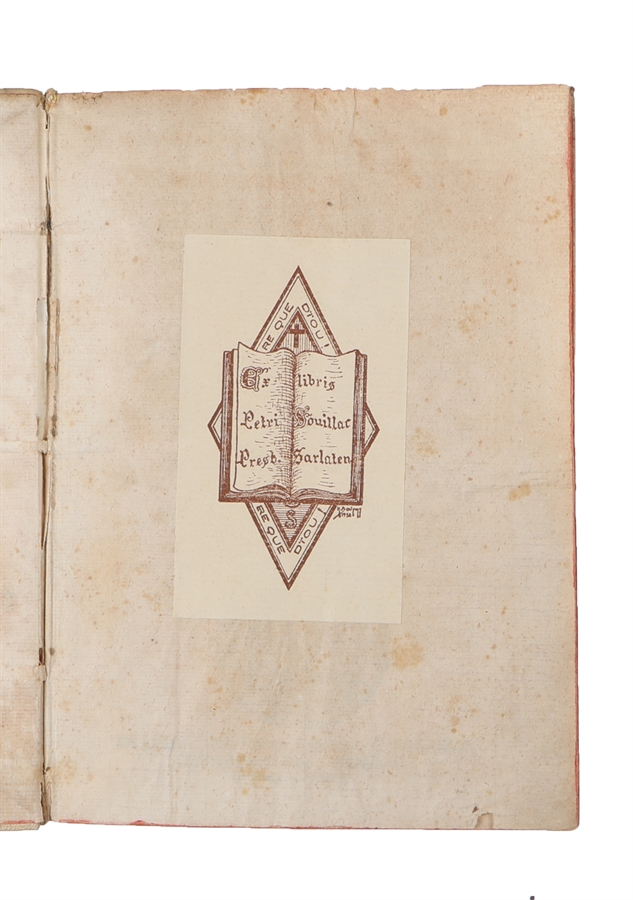
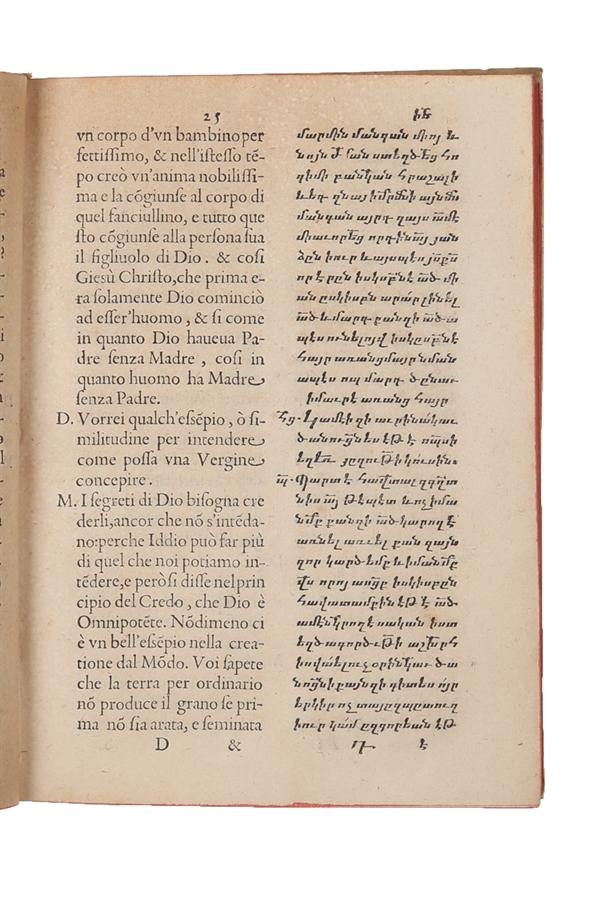
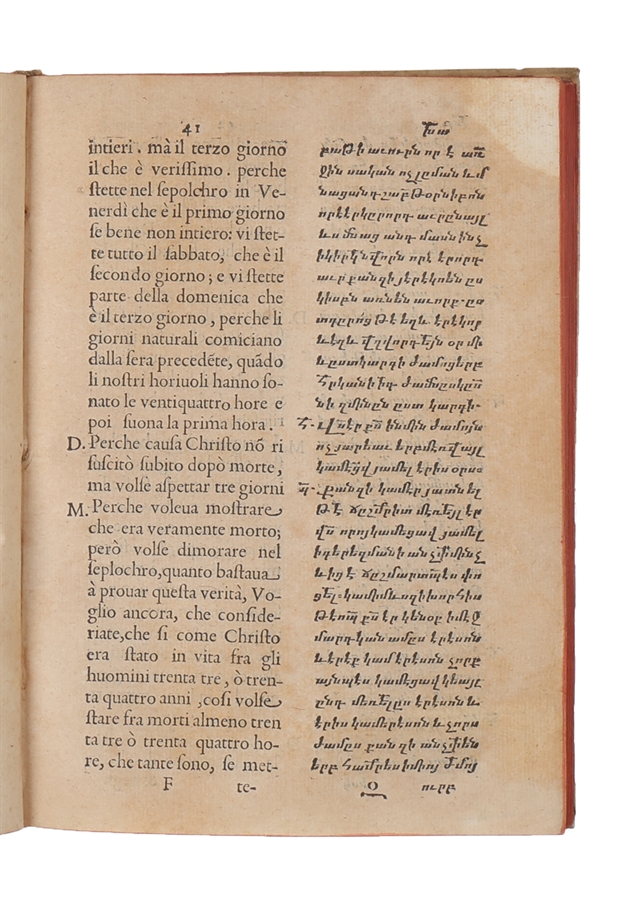
4to (220 x 150 mm). In contemporary limp vellum with double gilt line-borders with gilt cornerpieces (in the form of dragons) to boards and gilt super ex-libris (Cardinal Borghese) to both boards. All edges coloured in red. Two different Ex-libris to inside of front board and front free end-paper respectively (see below for provenance). Spine with a bit of loss of the vellum, partly showing the cords. Last three leaves with worm-tracts in lower margin. Dual-language text, Latin/Armenian, in two columns. A very nice copy with a most attractive provenance. (8), 275 pp.
Provenance:
- Cardinal Borghese, most likely Cardinal Scipione Borghese (1576 – 1633), one of the wealthiest and most powerful men in Rome during the first third of the seventeenth century. A legendary art collector, he commissioned sculptures that would come to define the Baroque movement.
- Prince Borghese, likely Marcantonio Aldobrandi (1814-86).
- Petrus Souilla, a French priest in ‘Sarlaten’, probably Sarlat-la-Canéda in the south of France, possibly a Pierre Souillac.
Exceedingly rare first complete Armenian translation of Bellarmino’s influential ”Dottrina Christiana” printed by the Propaganda Fide in Rome in 1630, one the earliest Armenian books issued by the celebrated missionary press established at the height of the Counter-Reformation. The present copy has a most interisting provenance, having the arms of Cardinal Scipione Caffarelli-Borghese (1577-1633) - nephew of Pope Paul V - one of the most powerful figures of Baroque Rome and the legendary patron of Bernini and Caravaggio. “The Congregation de Propaganda Fide was established by Gregory XV in 1622 in order to centralize and direct the missionary activities of the Catholic Church. Its purpose was not merely the propagation of the faith among non-Christians, but also the recovery of territories lost to Protestantism.” (Peter Guilday, The Sacred Congregation de Propaganda Fide (1622-1922)) Translated into Armenian only seven years after the first abbreviated edition of 1623, the so-called large catechism, whose first edition appeared in Italian as ”Dichiarazione più copiosa della dottrina christiana”, reflects the intense Catholic missionary efforts directed toward the Armenian communities of the Near East and Caucasus. Bellarmino’s catechism - presented as a dialogue between teacher and pupil - became one of the defining texts of post-Tridentine Catholicism and remained in use for centuries. Bellarmino himself was later canonised and declared Doctor of the Church. The Armenian translation forms part of the broader cultural and intellectual revival stimulated by contact between Eastern Christians and Western Europe during the seventeenth century. “The activities of Catholic missionaries among the Armenians unintentionally stimulated an Armenian intellectual revival by forcing the Gregorian clergy to arm themselves with the most modern scholarship and to undertake new translations and studies.” (Harry Jewell Sarkiss, The Armenian Renaissance, 1500-1863). An exceptionally rare copy; we have not been able to trace any auction records and have located merely four copies in institutions (Yale, Harvard, and Michigan in the US, and The Matenadaran in Yerevan, Armenia) Recent provenance: The book is from the estate of the Samuelian family, Paris. Hrant Samuelian (1891–1977) was a famous Armenian bookseller, publisher, political activist and prominent member of the Armenian Revolutionary Federation (ARF), the influential nationalist movement founded in 1890 with the aim of securing political and economic autonomy for Ottoman Armenia - at times through organized revolutionary activity. Having survived the upheavals that marked the final years of the Ottoman Empire, Samuelian became one of the central cultural figures of the Armenian diaspora in France.
Scholars of Armenian intellectual history argue that these Catholic missionary publications stimulated broader Armenian scholarship and printing culture. Harry Jewell Sarkiss famously wrote about Catholic missionary activity among the Armenians:
In 1930, he founded the celebrated Librairie Samuelian in Paris, which quickly developed into one of the most important intellectual and social centers of the Armenian community. The bookstore remained an important Parisian institution throughout much of the 20th century until its recent closure. The provenance from the Samuelian family library thus represents an association not only with an important Armenian bookselling dynasty, but also with the broader cultural and intellectual history of the Armenian diaspora in Europe.
Order-nr.: 63177